
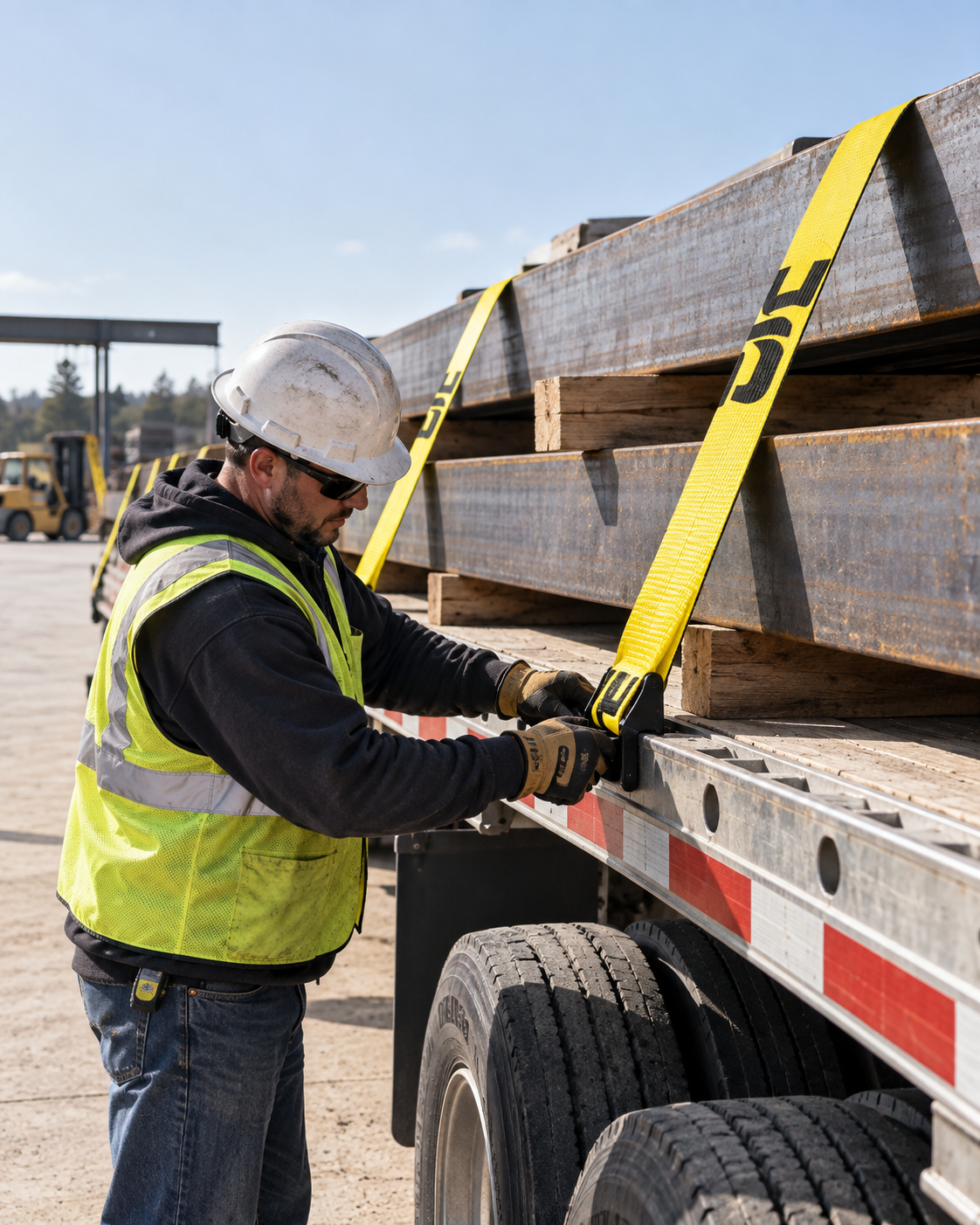
Choosing the right ratchet strap is about more than picking a length and color. The right setup depends on what you're hauling, how the cargo is positioned, where the strap will connect, and the type of hardware required for the job.
Whether you're securing equipment, materials, vehicles, or everyday cargo, a properly selected tie-down setup helps make loading and transport more straightforward.
What Is a Ratchet Strap?
A ratchet strap is a cargo securement system that uses webbing and a ratcheting mechanism to create and maintain tension.
Compared with basic ropes or elastic cords, ratchet straps provide more controlled tension and are widely used for trailers, trucks, vehicles, equipment, and general cargo.
Different straps can vary by:
- Webbing width
- Overall length
- Ratchet size
- Hook or end-fitting type
- Load rating
- Intended application
That is why choosing the correct configuration matters.
1. Start With the Load
First, consider what you are actually securing.
A small box in a pickup bed does not require the same setup as a vehicle, heavy equipment, lumber, or commercial cargo.
Think about:
- Size and weight of the load
- Shape of the cargo
- Number of securement points
- Whether the cargo can shift during transport
- Where the straps will contact the load
For heavier or larger loads, you may need wider webbing, stronger hardware, or multiple tie-down points.
Internal link: Add a link here to your Ratchet Straps collection.
2. Choose the Right Strap Width
Ratchet straps are available in different widths for different types of hauling.
Narrower straps are generally suited to lighter-duty applications, while wider straps are commonly used for larger cargo and more demanding transport setups.
Instead of choosing based on appearance alone, always check the product specifications and make sure the strap is suitable for your intended load.
Never assume two straps with similar dimensions have the same capacity.
3. Select the Correct Length
The strap needs to be long enough to travel around or across the cargo and reach the required anchor points.
Too short, and the strap may not reach.
Too long, and you may end up with unnecessary loose webbing that needs to be safely managed.
Before purchasing, measure the approximate path the strap will follow and allow enough length for tensioning.
For regular hauling, keeping several common lengths available can make different jobs easier to handle.
4. Pay Attention to End Fittings
The strap itself is only part of the securement system.
End fittings determine how the strap connects to a trailer, truck bed, track, or anchor point.
Common configurations can include hooks, flat hooks, E-Track fittings, and other cargo-control hardware.
The correct choice depends on your vehicle and existing anchor system.
If your trailer uses an E-Track system, for example, an E-Track Strap can provide a cleaner and more direct connection than using unrelated hardware.
Internal link: Link E-Track Straps to your E-Track collection.
5. Vehicle Transport Requires the Right Setup
Transporting a vehicle is different from securing ordinary cargo.
Vehicle tie-down systems may secure the wheel, tire, axle, or another approved attachment point depending on the specific product and transport setup.
Using a purpose-built Auto Hauling Strap makes it easier to match the strap to the application.
Always follow the instructions for the specific tie-down system and vehicle being transported.
Internal link: Link Auto Hauling Straps to your vehicle transport collection.
6. Check the Strap Before Every Use
Before securing a load, inspect the complete tie-down assembly.
Look for signs such as:
- Cuts or damaged webbing
- Excessive abrasion
- Broken or loose stitching
- Bent or damaged hardware
- Corrosion that affects operation
- A ratchet mechanism that does not operate correctly
If a strap is damaged or its condition is uncertain, replace it rather than relying on it for cargo securement.
7. Always Check the Product Rating
One of the most important parts of choosing cargo securement equipment is understanding the product's verified rating.
Do not judge capacity by strap width, webbing thickness, or hardware size alone.
Use the specifications provided for the exact product and make sure the complete securement setup is appropriate for the load.
Never exceed the manufacturer's stated limits, and always follow applicable cargo-securement requirements for your vehicle, load, and region.
Which Ratchet Strap Is Right for You?
There is no single strap that is perfect for every hauling job.
The best choice depends on:
Your cargo → Your anchor points → Your hardware → Your transport setup
For general cargo, a traditional ratchet strap may be the best starting point.
For vehicle transport, choose equipment designed specifically for wheels and vehicle securement.
For enclosed trailers and track-based systems, E-Track-compatible straps may be the better option.
At XSTRAP, we focus on straightforward cargo securement solutions for real-world hauling applications.
CTA:
SHOP RATCHET STRAPS →
Frequently Asked Questions
What size ratchet strap do I need?
It depends on the cargo, anchor system, required length, and the verified rating of the specific strap. Always choose equipment appropriate for the actual load rather than selecting by width alone.
Can I use a ratchet strap to secure a vehicle?
Only use a tie-down system that is appropriate for vehicle transport and compatible with the intended securement point. Purpose-built vehicle tie-down straps are generally the better choice.
When should I replace a ratchet strap?
Replace a strap when the webbing, stitching, ratchet, hooks, or other hardware shows damage that could affect safe use.
Can ratchet straps be used with E-Track?
Only if the strap is equipped with compatible E-Track fittings or is part of a properly designed E-Track securement system.